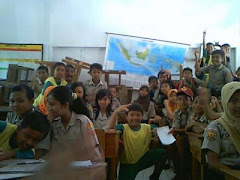
Jumat, 22 Mei 2009

Cambridge International Primary Programme

  • What is the Cambridge Primary Curriculum Framework?
  • The Cambridge International Primary Programme is comprised of several elements, the core of which is the Cambridge Primary Curriculum Framework. This framework provides the learning goals for each stage. It is advisable to refer to it as you progress to confirm which stage you believe your students to be working at. The diagnostic feedback provided by the analysis software refers to the learning objectives listed in the Curriculum Framework.
  • What are the benefits of the Primary Programme?
  • Foundation for secondary education. The Primary Programme aids identification of a student’s strengths and weaknesses and can be used to support learning and development. The Primary Programme progresses students seamlessly into middle years curricula, such as Cambridge Checkpoint and IGCSE.
    External benchmark. The Primary Programme provides teachers with an external benchmark to inform their teaching and easily measure students’ progress over time. It also allows detailed, structured reporting to parents.
    International curriculum. Appropriate and relevant internationally, the Primary Programme has been designed to be culturally sensitive. It includes top–quality teaching and assessment resources appropriate for teaching and learning in local and international schools. The structure of the Programme encourages teachers to use their own materials, bringing in local, national and international examples.
    Flexibility. The Primary Programme complements a range of teaching methods and curricula. No part of the programme is compulsory and Centres are at liberty to choose the parts that best suit their situation.
  • What makes the Cambridge International Primary Programme ‘international’?
  • The Cambridge International Primary Programme has been designed specifically with international schools in mind. The Curriculum Framework provides a solid foundation in mathematics, English and science that is relevant and useful to students and teachers across the world. The assessment materials have been developed carefully to ensure that there is no bias resulting from question context or colloquial language and the Programme structure allows full flexibility for teachers to include resources that are directly relevant to their students and the local context. Care has been taken at the question writing phase to use short, simple sentences without unduly complex language or grammar to enable access for children who may not speak English as their mother tongue.
  • How does the Primary Programme reflect local and national content requirements?
  • The Cambridge International Primary Programme provides a framework for teaching the core subjects of English, mathematics and science. The English and Mathematics Curriculum Frameworks comprise a series of progressive objectives that describe development of essential literacy and numeracy skills but allow for use of local and national content and cross–subject activities. The Science Primary Curriculum Framework provides a structure for developing scientific enquiry, i.e. teaching students to think like scientists, as well as suggested topics for content–based learning. Schools are at liberty to choose whether they want to teach some or all of the content and can decide what order to teach it in.

    Schools could, in fact, continue to teach their local programmes alongside the Cambridge Primary Programme and use the Cambridge assessments as a valid and useful tool, provided that the learning objectives of the Cambridge Programme are adequately covered.
  • Our Centre follows the National Curriculum for schools in England and Wales. Why should we change to the Cambridge International Primary Programme?
  • If your Centre follows the National Curriculum used in England and Wales, the Cambridge International Primary Programme could provide a valuable addition to the provision in your school. The Cambridge Primary Programme provides Progression Tests for in–school use for Stages 3–8 in mathematics and English, and Stages 6–8 in science (Stage 3 is equivalent to Year 3 in the UK). The Progression Tests can be used to track your students’ progress compared with a cohort of students in international schools around the world, and the diagnostic software allows you to produce reports on students’ strengths and weaknesses, to feed back into learning. In addition, membership of the Primary Programme includes entries to the Cambridge International Primary Achievement Test, which is available in English, mathematics and science at the end of Stage 6 (Key Stage 2). The Achievement Tests are moderated in Cambridge and all students receive a certificate from CIE.

    The Cambridge International Primary Programme has a similar model and covers similar material to the National Curriculum, which allows you to administer the two curricula alongside one another or just use the Cambridge curriculum with the knowledge that students would easily be able to transfer back to schools in the UK. Following the National Curriculum would provide students with the knowledge and skills they require to succeed in the Cambridge tests; similarly, following the Cambridge International Primary Programme would provide students with the foundations they need to take UK Key Stage tests.
  • At what age should children start following the Primary Programme?
  • The Primary Programme is organised into six Stages, each of which represents a year of primary education. Stage 1 is the first year of primary school, when children are approximately 5 years old, and stage 6 is the final year, during which children reach their 11th birthday. The Curriculum Framework documents for English and mathematics provide learning objectives for stages 1–6, while science covers stages 3–6. However, in some educational contexts it may be appropriate to introduce the stages at slightly different ages or to expand/contract some stages so that they take more/less than a year to complete.
  • How does the Cambridge International Primary Programme relate to the National Curriculum in England?
  • The Cambridge Primary Curriculum Framework has its roots in The National Curriculum but has been developed specifically for education internationally. This makes it an ideal choice for international schools because it is based on sound educational principles and tried and tested methodology. This means that schools can feel confident that they are using tested best practices whether their students move on to a school offering a local, British or international programme of study.
  • What are the Primary Progression Tests?
  • The Cambridge Primary Progression Tests are a series of tests, from Stages 3 to 6, which can be used within a school to monitor progress of individuals and classes of students. They can be used to provide diagnostic feedback which can inform further teaching and learning, or can be used for reporting purposes. They can also be used to assess the performance of the students against an international benchmark.
  • What is the Primary Achievement Test?
  • The Cambridge Primary Achievement Test provides a summative measure of the student’s learning during the primary phase and is intended for students at the end of their final year of primary schooling. The tests are written with international schools in mind in that they are carefully designed to avoid offensive and confusing material. They are written for students who are proficient in English, but they avoid the use of colloquial language and strongly British expressions and contexts. They are suitable for students who have been taught in English, but for whom English is not necessarily their first language – that is, the tests are designed to be accessible and, for science and mathematics, the tests aim to assess skills and knowledge without penalising for language. However, the same high standards are expected regardless of the mother tongue of the student.
  • What resources does CIE publish in support of the Primary Programme?
  • There are a variety of methods of support offered for centres and teachers enrolled on the Primary Programme:
    • Cambridge Primary teacher support website: The website includes Schemes of Work, a discussion group and Progression Tests (tests, mark schemes and test analysis software).
    • Classroom Activities for the Cambridge International Primary Programme. These books are available in English, mathematics and science. Copies of the Classroom Activities can be ordered from CIE Publications.
    • Planning the Effective Delivery of the Cambridge International Primary Programme booklet. This booklet has been produced to provide support for teachers as they implement the Cambridge International Primary Programme. It will help teachers to plan from the outset and aid in the continued smooth running of the Programme within their school. It is designed to be either read from cover–to–cover or as a reference document to follow up on particular issues.
  • What other materials does CIE recommend to support delivery of the Primary Programme?
  • The following materials have been approved by CIE for use to support the delivery of the Primary Curriculum Framework in English, mathematics and science. The materials include printed and electronic resources for both students and teachers. They have all been thoroughly reviewed alongside the Primary Curriculum Framework documents for English, mathematics and science to assess their suitability.

    Subject Title of Course Publisher URL
    English Oxford Reading Tree (for Stages 1 to 2) Oxford University Press www.oup.com

    Quest Language Programme (for stages 3 to 6) Oxford University Press www.oup.com
    Mathematics New Heinemann Maths Harcourt Education www.myprimary.co.uk
    Science Explore Science Harcourt Education www.myprimary.co.uk
  • Is there training available to support the Primary Programme?
  • CIE plan to extend their teacher professional development services to the Primary Programme. The intention is to make some training available online and some available on a face-to-face basis based on regional demand. These two approaches will be complementary. As soon as the programmes are finalised we will be advertising them here on CIE Online, both within this section and also within the training section.
  • What does ‘suitable facilities’ mean?
  • Suitable facilities, resources and staff could be defined overall as providing:
    • A positive, supportive and inclusive learning environment that enables all students to achieve their full potential and to progress through the learning objectives as set out in the Cambridge International Primary Programme
    • A dedicated teaching space or classroom for each year group, and suitable resources available to support the learning set out in the Cambridge International Primary Programme and broader educational outcomes (books, libraries, computers, art and craft rooms, science labs or demonstration areas)
    • Teachers with recognised qualifications or previous experience
    The criteria are not intended to be prescriptive in any way and are flexible to account for local circumstances. They are, however, designed to ensure that prospective centres are able to offer the programme in a manner that CIE considers appropriate to facilitate the achievement of positive educational outcomes for students.

    If prospective centres have queries about the suitability of their facilities and resources they are welcome to contact the Centre Support team via international@ucles.org.uk to discuss their concerns.
  • We are already a Cambridge International Centre. Why do we have to pay for the Primary Programme separately?
  • We have made the Cambridge Primary Curriculum Framework freely available to all our Cambridge International Centres. However, only Cambridge International Primary Centres that have paid their membership fees can access the full Programme materials including the progression tests and schemes of work. The Programme membership fees also include entries for the Cambridge International Achievement Tests in English, maths and science for students in their final year of primary schooling.
  • Is there training available to support the Primary Programme?
  • CIE plan to extend their teacher professional development services to the Primary Programme. The intention is to make some training available online and some available on a face–to–face basis based on regional demand. These two approaches will be complementary. As soon as the programmes are finalised we will be advertising them here on CIE Online, both within this section and also within the training section.

Rabu, 22 April 2009

Cambridge International Primary Programme

Resources

Primary curriculum framework

The Cambridge Primary curriculum framework identifies a comprehensive set of learning objectives for English, Mathematics and Science for each year of primary education, which:

  • provide a natural progression through the six years of primary education
  • provide a valuable structure that focuses on what children should be able to do at each of the primary stages

Download the Cambridge Primary curriculum framework

Published support resources

Teaching and learning resources

CIE has worked with leading educational publishers to provide recommendations for published resources for use with Cambridge Primary. We aim to determine those materials that best reflect the content of the primary curriculum for English, Mathematics and Science. The recommended teaching schemes were identified through a process of content mapping, quality assurance and feedback from trial schools. The materials provide a variety of printed and electronic resources for both learners and teachers.

Teaching schemes endorsed by CIE

Science scheme

  • Explore Science International Edition published by Heinemann

Teaching schemes recommended by CIE

English schemes

  • Oxford Reading Tree published by Oxford University Press
    (reading scheme for Stages 1 and 2)
  • Quest published by Oxford University Press
    (language scheme for Stages 3 to 6)

Mathematics scheme

  • New Heinemann Maths published by Heinemann

Mapping documents to link each of these schemes with the Cambridge Primary Curriculum Framework are available on the Cambridge Primary teacher support website.

Download further recommended resources

Cambridge Primary teacher support website

Registered schools will have free and unlimited access to the Cambridge Primary teacher support website. The site contains administration and support resources, including schemes of work for each part of Cambridge Primary. News and information on primary events and training also are provided. Cambridge Primary registration includes one year's subscription to an online training course. The course enables an unlimited number of teachers within the school to learn at their own pace over the first year, and covers essential teaching skills. Teachers are encouraged to reflect on their own teaching experience and required to carry out activities.

A suite of support materials is available on the website to help teachers plan and deliver the course. Because we work closely with publishing partners and curriculum providers, CIE can recommend textbooks, workbooks and other teaching resources that closely match the learning outcomes of the Cambridge Primary curriculum framework. These resources can be purchased separately and mapping documents are available to show how the resources support teaching.

Cambridge teacher training

Cambridge teacher training events include a range of face-to-face and online subject-specific training courses. Cambridge offers introductory, intermediate and advanced training courses enabling teachers to select courses which best suit their own learning level and school timetable.

In addition, Cambridge offers Professional Development Qualifications for Cambridge teachers, enabling teaching professionals to develop their skills even further by improving the quality of their teaching and learning.

Information for parents

The following fact sheets can be reproduced to provide information for parents. The context is the same on both, but one is black and white for ease of reproduction.


Sources:

Cambridge International Education

Minggu, 22 Maret 2009

Cambridge International Primary Programme

Tests

The Cambridge Primary curriculum framework provides an optional testing structure - to assess learner performance and report progress to learners and parents. Cambridge Primary assessment gives parents extra trust in feedback on their child's progress - by using internationally benchmarked tests.

There are two assessment options within the Cambridge Primary stage:

The Cambridge Primary testing structure enables teachers to:

  • track the progress of their learners
  • identify strengths and weaknesses within individuals and class groups
  • develop further teaching and learning support using information from test results
  • use test results to report to parents
  • provide learners with a Statement of Achievement at the end of their primary schooling

The tests comprise structured questions with a selection of item types, including multiple choice, matching, short answer and long answer.

Cambridge Primary progression tests

Cambridge Primary progression tests provide valid internal assessment of knowledge and skills in English and Mathematics. The tests:

  • are available for each year of primary education
  • are optional (schools can choose any quantity of tests to take or just follow the curriculum without testing at all)
  • can be used at any point during the year and as many times as the teacher requires
  • are culturally sensitive without being culture-free, which makes them ideal for use in the international school context
  • comprise structured questions with a selection of item types including matching, short answer and longer answers
  • are marked by teachers in your school; full mark schemes and marking guidance are provided for this

Analysis tool software is part of Cambridge Primary. This software enables teachers to track student progress and to produce diagnostic feedback, enabling comparison between individuals and between groups of learners, and facilitating the identification of the strengths and weaknesses of individuals and groups.

The tests are freely available on the Cambridge Primary teacher support website and teachers can download them and make as many copies as they wish for internal school use. The papers will be renewed on a rolling basis. Test booklets also can be purchased through our publications department.

Cambridge Primary Achievement Tests

Cambridge Primary Achievement Tests are for learners at the end of their final year of primary education. The tests are available in three core subjects: English, Mathematics and Science, and:

  • are marked by teachers
  • are moderated by CIE
  • provide learners with a Statement of Achievement
  • can be taken at any point within a fixed period of time
  • are available in June and November each year

application/pdf Sample paper: English (210Kb)
application/pdf Sample questions: Mathematics (88Kb)
application/pdf Sample questions: Science (117Kb)

Sumber:

Cambridge International Education

Minggu, 22 Februari 2009

Cambridge International Primary Programme

Overview

The Cambridge International Primary Programme, typically for 5–11 year olds, gives schools a curriculum framework to develop Mathematics, English and Science skills and knowledge in young children. Cambridge Primary provides guidance for curriculum development and classroom teaching and learning. It enables teachers to assess children's learning as they progress with two optional assessments: Cambridge Primary progression tests and Cambridge Primary Achievement Tests.

Benefits

Foundation for secondary education

Cambridge Primary aids identification of a student's strengths and weaknesses and can be used to support learning and development. It provides learners with excellent preparation so they can progresses seamlessly into Cambridge Secondary 1 and beyond.

External benchmark

As an international programme, Cambridge Primary provides teachers with an external benchmark to inform their teaching and easily measure learners' progress over time. It also enables detailed, structured reporting to parents.

International curriculum

Appropriate and relevant internationally, Cambridge Primary has been designed to be culturally sensitive. It includes top-quality teaching and assessment resources appropriate for teaching and learning in local and international schools.

Flexibility

Cambridge Primary complements a range of teaching methods and curricula. No part of the programme is compulsory and schools have freedom to choose the parts that best suit their situation.

Using the Primary Programme with other curricula

The modular nature of Cambridge Primary means that it can either be used as the central teaching curriculum or to complement other curricula.

Teachers may continue to follow a local curriculum, to meet the statutory requirements of their national system, whilst using the Cambridge Primary progression tests to enhance their teaching and reporting. Similarly, Cambridge Primary can be used for teaching and tracking the core skills in English, Mathematics and Science while another curriculum is used for any other subjects that may be taught.

Cambridge progression

Cambridge Primary forms part of Cambridge International Education for 5-19 years, offering routes candidates can follow from post-kindergarten stage through to university entrance. Cambridge's provision also includes first-class support for teachers through publications, online resources, training, workshops and professional development.


Sources:

Cambridge International Education

Kamis, 22 Januari 2009

Sekolah Dasar di Jepang

Shōgakkō (小学校) are elementary schools in Japan.

More than 99% of Japanese elementary school-age children are enrolled in school. All children enter first grade at age six, and starting school is considered a very important event in a child's life.

Virtually all elementary education takes place in public schools; less than 1% of the schools are private. Private schools tended to be costly, although the rate of cost increases in tuition for these schools had slowed in the 1980s. Some private elementary schools are prestigious, and they serve as a first step to higher-level private schools with which they are affiliated, and thence to a university. Competition to enter some of these "ladder schools" is quite intense.

Although public elementary education is free, some school expenses are borne by parents, for example, school lunches and supplies. For many families, there are also nonschool educational expenses, for extra books, or private lessons, or juku. Such expenses rose throughout the 1980s, reaching an average of 184,000 Yen in FY 1987 for each child. Costs for private elementary schools are substantially higher.

Elementary school classes are large, about thirty-one students per class on average, but higher numbers are permitted. Students are usually organized into small work groups, which have both academic and disciplinary functions. Discipline also is maintained[citation needed], and a sense of responsibility encouraged, by the use of student monitors and by having the students assume responsibility for the physical appearance of their classroom and school.


Course of study

A Shōgakkō or Elementary school class in Japan

The ministry's Course of Study for Elementary Schools is composed of a wide variety of subjects, both academic and nonacademic, including moral education and "special activities." "Special activities" refer to scheduled weekly time given over to class affairs and to preparing for the school activities and ceremonies that are used to emphasize character development and the importance of group effort and cooperation. The curriculum includes Japanese language, social studies, arithmetic, and science. Nonacademic subjects taught include art (including Japanese calligraphy) and handicrafts, music, homemaking, physical education, and moral education. Japanese language is an emphasized subject. The complexity of the written language and the diversity of its spoken forms in educated speech (keigo)(敬語) require this early attention.

A new course of study was established in 1989, partly as a result of the education reform movement of the 1980s and partly because of ongoing curriculum review. Important changes scheduled were an increased number of hours devoted to Japanese language, the replacement of the social sciences course with a daily life course- -instruction for children on proper interaction with the society and environment around them—and an increased emphasis on moral education. New emphasis also was to be given in the curriculum to the national flag and the Japanese national anthem. The ministry suggested that the flag be flown and the national anthem sung at important school ceremonies. Because neither the flag nor the anthem had been legally designated as national symbols, and because of the nationalistic wartime associations the two had in the minds of some citizens, this suggestion was greeted with opposition. The English Language is taught at some schools especially in the higher grades; it is not yet mandatory at this level, but it is being planned for 5th & 6th grade from 2011,[1] as in 2002 TOEFL scores in Japan were the worst in Asia after North Korea.[2]


Equipment

There is a system of educational television and radio, and almost all elementary schools use programs prepared by the School Education Division of Japan's ex Broadcasting Corporation (Nippon Hoso Kyokai--NHK) (日本放送協会). In addition to broadcast media schools increasingly are equipped with computers. Although only 6.5% of public elementary schools had personal computers in 1986, by 1989 the number had passed 20%.

Lunch

Virtually all elementary schoolchildren receive a full lunch at school. Although subsidized by the government, the program is not altogether free. Full meals usually consist of bread (or increasingly, of rice), a main dish, and milk. Although the program grew out of concern in the immediate postwar period for adequate nutrition, the school lunch is also important as a teaching device. Because there are relatively few cafeterias in elementary schools, meals are taken in the classroom with the teacher, providing another informal opportunity for teaching nutrition and health and good eating habits and social behavior. Frequently, students also are responsible for serving the lunch and cleaning up.

Problems

Japanese elementary schooling is seen[who?] as effective, but not without some problems, notably increasing absenteeism and school refusal and troublesome number of cases of bullying (ijime) (いじめ). In addition, special provision for the young children returning to Japan from long periods spent overseas is an issue. The government also is concerned with the education of Japanese children residing abroad, and it sends teachers overseas to teach in Japanese schools.

Sources:

Wikipedia

Senin, 01 Desember 2008

Pupuh Dangdanggula

Dangdanggula ngarupakeun tembang pupuh nu ngagambarkeun katengtreman, kawaasan, kaagungan, jeung kagumbiraan. 

Conto Tembang 

Mega beureum surupna geus burit
Ngalanglayung panas pipikiran
Cikur jangkung jahe koneng
Naha teu palay tepung

Sim abdi mah ngabeunying leutik
Ari ras cimataan Gedong tengah laut
Ulah kapalang nya bela
Paripaos gunting pameulahan gambir

Kacipta salamina

Hiji basa, hiji bangsa
Basa bangsa, Indonesia
Hiji bangsa, hiji nusa
Nusa tunggal, Nusantara
Seler-seler, suku bangsa
Di wewengkon, mana-mana
Sakasuka, sakaduka
Wujud bangsa, Indonesia

Jumat, 14 November 2008

Pendidikan Bermutu di Tengah Pentas Budaya Instan II

Disusun dan Diedit Oleh: 
Wawan Nurwana dan Arip Nurahman
Indonesia University of Education 


Menurut Rizky Ananda: Bangsa Indonesia merupakan negara yang terkenal akan kekayaan dan kesuburan sumberdaya alam yang sangat melimpah dan tak ternilai harganya sehingga berpotensi memiliki aset yang sangat berharga bagi peradaban dunia, segala macam kekayaan biodiversity ada di negeri ini. 

Di Era yang serba modern, dengan dipengaruhi perkembangan teknologi dan informasi menyebabkan pihak asing berlomba-lomba menakhlukkan negara tercinta ini, walaupun Indonesia memiliki sumber daya alam yang melimpah bukan berarti memiliki sumber daya manusia yang melimpah dan berkualitas pula. 

Hal ini ditunjukkan oleh banyaknya tenaga kerja kita yang hanya dijadikan pembantu, pelayan dan pekerjaan yang tak layak lainnya di negeri lain.

Bangsa Indonesia merupakan negara yang memiliki etos kerja yang rendah dan juga pendidikan yang kurang, dengan kenyataan tersebut membuat rakyat semakin terpojokkan karena tidak mampu bersaing dengan warga asing, banyak anak Indonesia yang tak mampu meneruskan sekolahnya ke jenjang yang lebih tinggi dan bahkanada yang tidak dapat mengenyam bangku pendidikan sama sekali.

Pendidikan sangat berperan penting dalam meningkatkan kesejahteraan rakyat dan memotong rantai kemiskinan. Pendidikan dari setiap jenjang perlu diperbaiki dan ditingkatkan kualitasnya.
Sumber Dari:
Tata Sutabri S.Kom, MM.

Deputy Chairman of STMIK INTI INDONESIA, Pemerhati Dunia Pendidikan TI, Jl. Arjuna Utara No.35  Duri Kepa Kebon Jeruk, Jakarta Barat 11510 Telp. 5654969, e-mail : tata.sutabri@inti.ac.id  


Pendidikan Cenderung Dibisniskan. 


Munculnya berbagai cara yang mengarah pada pelanggaran etika akademik yang dilakukan perguruan tinggi kita untuk memenangkan persaingan, menunjukkan bahwa pendidikan kini cenderung dipakai sebagai ajang bisnis. Pola promosi yang memberikan kemudahan dan iming-iming hadiah merupakan suatu gambaran bahwa perguruan tinggi tersebut tidak ada inovasi dalam hal kualitas pendidikan. Kecenderungan tersebut akan menghancurkan dunia pendidikan, karena akhirnya masyarakat bukan kuliah untuk meningkatkan kualitas diri, melainkan hanya mengejar gelar untuk prestise.

Kondisi pendidikan tinggi saat ini cukup memprihatinkan. Ada PTS yang mengabaikan proses pendidikan. Bahkan ada PTS yang hanya menjadi mesin pencetak uang, bukan menghasilkan lulusan yang berkualitas. Hal Ini yang membuat persaingan menjadi semakin tidak sehat. Produk lulusan perguruan tinggi yang proses pendidikannya asal-asalan dan bahkan akal-akalan, juga cenderung menghalalkan segala cara untuk merekrut calon mahasiswa sebanyak-banyaknya, dengan promosi yang terkadang menjebak dengan iming-iming hadiah yang menggiurkan. Apakah ini gambaran pendidikan berkualitas ?.

Bahkan ada beberapa PTS di Jakarta yang memainkan range nilai untuk meluluskan mahasiswanya, karena mereka takut, ketika selesai ujian akhir (UTS/UAS) banyak mahasiswanya yang tidak lulus alias IP/IPK nasakom. Sehingga mereka lulus dengan angka pas-pasan yang sebenarnya mahasiswa tersebut tidak lulus. Dalam hal ini semua pihak harus melakukan introspeksi untuk bisa memberi pelayanan pendidikan yang berkualitas. Kopertis, harus bersikap tegas menindak Perguruan Tinggi Swasta (PTS) yang melanggar dan mensosialisasikan aturan yang tak boleh dilanggar oleh PTS.

Pengelola perguruan tinggi juga harus menghentikan semua langkah yang melanggar aturan. Kunci pengawasan itu ada secara bertahap di tangan Ketua Program Studi, Direktur, Dekan, Rektor dan Ketua Yayasan. Tantangan Lulusan Sarjana di Era Informasi. Ketika para sarjana memadati berbagai arena bursa kerja untuk menawarkan ilmu dan ijazah mereka, iklan-iklan penerimaan mahasiswa baru juga nyaris memenuhi halaman-halaman surat kabar. Dua fenomena tersebut ironis.

Promosi Perguruan Tinggi untuk menjaring calon mahasiswa sama "gencarnya" dengan peningkatan pengangguran lulusan. Di sisi lain, perlu diajukan pertanyaan, kualifikasi apakah sebenarnya yang disyaratkan oleh para pencari tenaga kerja lulusan sarjana Perguruan Tinggi ini ? Jawaban yang diperoleh para peneliti umumnya adalah campuran kualitas personal dan prestasi akademik. Tetapi pencari tenaga kerja tidak pernah mengonkretkan, misalnya, seberapa besar spesialisasi mereka mengharapkan suatu program studi di Perguruan Tinggi.

Kualifikasi seperti memiliki kemampuan numerik, problem-solving dan komunikatif sering merupakan prediksi para pengelola Perguruan Tinggi daripada pernyataan eksplisit para pencari tenaga kerja. Hasil survei menunjukkan perubahan keinginan para pencari tenaga kerja tersebut adalah dalam hal kualifikasi lulusan Perguruan Tinggi yang mereka syaratkan. Tidak setiap persyaratan kualifikasi yang dimuat di iklan lowongan kerja sama penting nilainya bagi para pencari tenaga kerja.

Dalam prakteknya, kualifikasi yang dinyatakan sebagai "paling dicari" oleh para pencari tenaga kerja juga tidak selalu menjadi kualifikasi yang "paling menentukan" diterima atau tidaknya seorang lulusan sarjana dalam suatu pekerjaan. Yang menarik, tiga kualifikasi kategori kompetensi personal, yaitu kejujuran, tanggung jawab, dan inisiatif, menjadi kualifikasi yang paling penting, paling dicari, dan paling menentukan dalam proses rekrutmen. Kompetensi interpersonal, seperti mampu bekerja sama dan fleksibel, dipandang paling dicari dan paling menentukan. Namun, meskipun sering dicantumkan di dalam iklan lowongan kerja, indeks prestasi kumulatif (IPK) sebagai salah satu indikator keunggulan akademik tidak termasuk yang paling penting, paling dicari, ataupun paling menentukan.

 Di sisi lain, reputasi institusi Pendidikan Tinggi yang antara lain diukur dengan status akreditasi program studi sama sekali tidak termasuk dalam daftar kualifikasi yang paling penting, paling dicari, ataupun paling menentukan proses rekrutmen lulusan sarjana oleh para pencari tenaga kerja. Ada kecenderungan para pencari tenaga kerja "mengabaikan" bidang studi lulusan sarjana.

Dalam sebuah wawancara, seorang kepala HRD sebuah bank di Cirebon menegaskan, kesesuaian kualitas personal dengan sifat-sifat suatu bidang pekerjaan lebih menentukan diterima atau tidaknya seorang lulusan Perguruan Tinggi. Misalnya, posisi sebagai kasir bank menuntut kecepatan, kecekatan, dan ketepatan. Maka, lulusan sarjana dengan kualitas ini punya peluang besar untuk diterima meskipun latar belakang bidang pendidikannya tidak sesuai.

Kepala HRD itu mengatakan, "Saya pernah menerima Sarjana Pertanian dari Bogor sebagai kasir di bank kami dan menolak Sarjana Ekonomi manajemen dari Bandung yang IPK-nya sangat bagus." Kualifikasi-kualifikasi yang disyaratkan dunia kerja tersebut penting diperhatikan oleh pengelola Perguruan Tinggi untuk mengatasi tidak nyambung-nya antara Perguruan Tinggi dengan dunia kerja dan pengangguran lulusan.

Jika pembenahan sistem seleksi mahasiswa baru dimaksudkan untuk menyaring mahasiswa sesuai kompetensi dasarnya, perhatian pada kualifikasi yang dituntut pasar kerja dimaksudkan sebagai patokan proses pengolahan kompetensi dasar tersebut. Untuk itu semua, kerja sama Perguruan Tinggi dan dunia kerja adalah perlu.

Selesai